Choose the wrong duct material for a corrosive fume extraction system, and you'll find out in maybe two years. Sometimes faster. These consequences show up in maintenance costs before they show up on inspection reports—joint failures, wall degradation, or a duct run that can't handle the temperature swings your particular process runs.
The choice between PVC air duct and fiberglass reinforced plastic duct systems depends on a handful of variables. Get them right, and both materials have legitimate applications. Miss them, and even a well-built system underperforms.
Key Takeaways
- PVC air duct works for specific acid chemistries at moderate concentrations and temperatures below 140°F. Push past those conditions and the cost advantage disappears fast.
- Fiberglass reinforced plastic ductwork handles the chemical and structural demands that rule out PVC—including large-diameter fabrication up to 120". For outdoor installations, UV-resistant gel coat is what separates a 20-year system from an early replacement.
- When fire rating is non-negotiable—as it is in most semiconductor fabs and occupied industrial buildings—SSTeelcoat is the answer regardless of what the chemical compatibility analysis says.
- Mixed-material systems create thermal expansion mismatches at flanged connections; the facilities that get this wrong don't usually find out until year four or five.
What Applications Are PVC Air Duct Systems Built For?
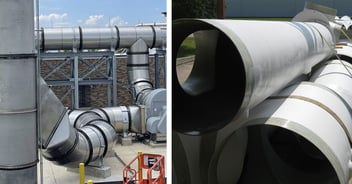
PVC air duct has a real place in industrial fume extraction—specific acid chemistries at moderate concentrations, lower operating temperatures, and applications where duct routing is relatively straightforward. Metal plating operations, certain pharmaceutical exhaust streams, and chemical environments where process temperatures stay within thermoplastic limits fit this profile well. For those situations, PVC's cost advantage over FRP or coated stainless is genuine and worth capturing.
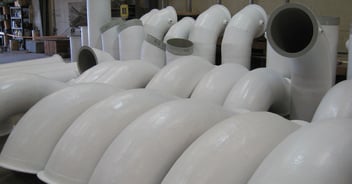
Viron custom-fabricates PVC ductwork from 4" to 96" diameter to FM-labeled standards, meeting SMACNA Thermoplastic Duct (PVC) Construction Manual requirements. The material specification—Type II, Grade I PVC per ASTM D-1784 with UV inhibitor—handles the applications it was designed for.
The limits surface when applications push past those conditions. Thermoplastics are temperature-sensitive. When exhaust streams run hot, or when a large-diameter duct needs to span significant distances without intermediate supports, PVC starts struggling structurally. Lower stiffness means closer support spacing—particularly on large-diameter runs—which adds installation complexity that can quietly erode the upfront cost advantage.
Outdoor exposure is another real consideration. Unprotected thermoplastic deteriorates with UV exposure over time, requiring UV-stabilized materials, dark pigments, or shielding. None of those are free, and they narrow the cost gap further.
When Does Fiberglass Reinforced Plastic Ductwork Make More Sense?
FRP air duct handles the conditions that push PVC past its limits. Broader chemical compatibility, higher structural capacity for large-diameter runs, and genuine durability in outdoor applications when the laminate is engineered correctly.
The chemistry argument is specific.
FRP built with vinyl ester resins handles aggressive chemistries across a range of demanding environments:
- Semiconductor fabs — vinyl ester resins resist hydrofluoric acid and sulfuric acid streams; a semiconductor fabricator's eight-scrubber system ($3.2 million installation) runs FRP for exactly these reasons
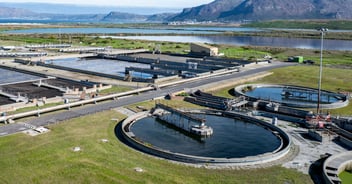
- Wastewater treatment plants — handles hydrogen sulfide off-gassing reliably
- Industrial chemical facilities — stands up to chlorine and caustic chemistries
- Municipal water systems — a $1.6 million SSTeelcoat ductwork project serving a major metropolitan treatment facility is one example where corrosive exhaust demanded chemistry-matched materials
The resin-rich inner corrosion barrier in a properly built FRP system, typically around 100 mils thick, provides that chemical resistance backed by structural plies maintaining dimensional integrity under pressure and vacuum.
Size capability matters on large projects. Viron fabricates FRP air ducts up to 120" diameter and larger. For large mains in semiconductor facilities or chemical plant ventilation systems, that headroom is useful.
Outdoor performance holds up well when systems are engineered with UV-resistant gel coat. Many facilities run FRP stacks outdoors for 20+ years when laminate quality is controlled, and inspection schedules are maintained.
One honest note on field modifications: FRP requires proper bonding procedures, edge reinforcement, and cure time. Accurate upfront design matters. Changes after installation are possible but more involved than field-cutting metal duct, which is worth factoring into projects where future expansion is likely.
How Does SSTeelcoat Change the Calculus?
When an application is demanding enough to push past PVC, and FRP is on the table, coated stainless steel ductwork often ends up being the better long-term answer—particularly when you run total cost of ownership rather than purchase price.
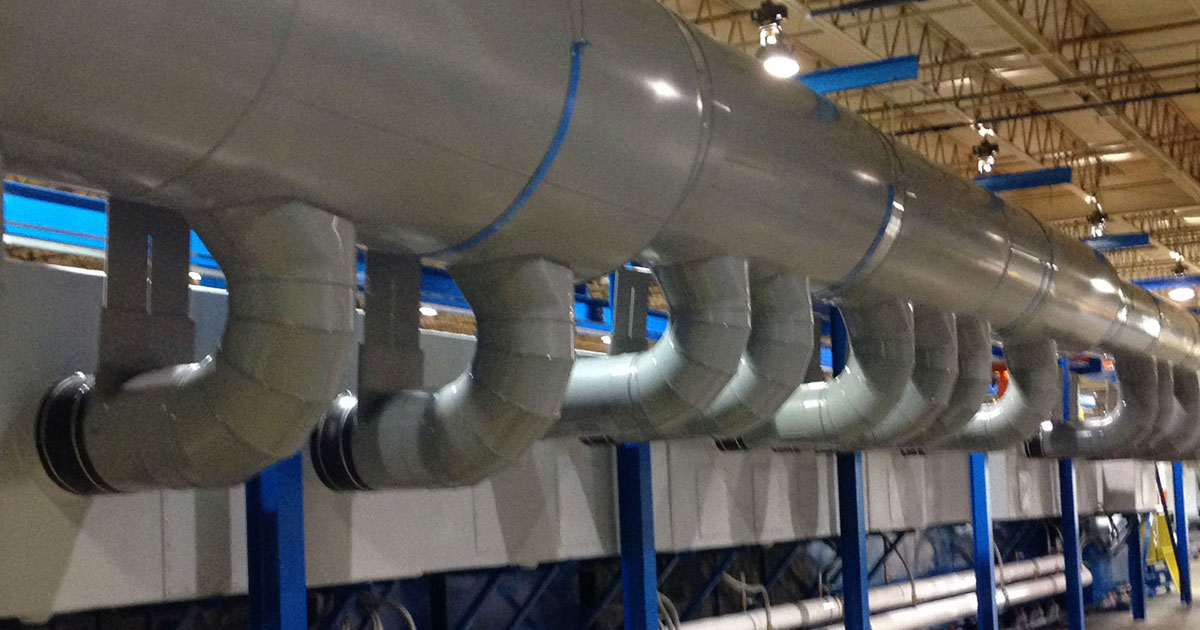
Viron's SSTeelcoat is 304 or 316 stainless steel with a Halar® (ECTFE) interior coating applied via electrostatic powder coating. It handles 300°F continuous temperatures, above what FRP is typically rated for. Class 1 fire rating per ASTM E-84, compliance with NFPA 820 and FM 4922. In occupied buildings and semiconductor fabs where fire performance requirements are strict, that compliance advantage is real. It eliminates the need for internal sprinklers in most installations and reduces insurance costs.
One semiconductor fabricator chose SSTeelcoat for duct tool hook-up across their RFAB2 facility—a $20 million project in one of the most chemically demanding manufacturing environments in the industry. Semiconductor fabs move HF, ammonia, and acid exhaust streams at scale, in buildings where fire rating isn't optional. The bolt-together Van Stone flange system was a practical factor too: faster installation, no cure time, and field modifications that don't require a specialized bonding crew.
In all honesty, FRP is a good material. But when customers call Viron years later for a system expansion on a duct run we installed, they're almost always calling about SSTeelcoat. The bolt-together system just performs differently over time.
Total life cycle cost typically favors SSTeelcoat over FRP—the upfront material cost is higher, but inspection requirements are minimal, UV degradation isn't a concern, and the service life is longer.
When to Use PVC, FRP, or Coated Stainless Steel for Fume Extraction
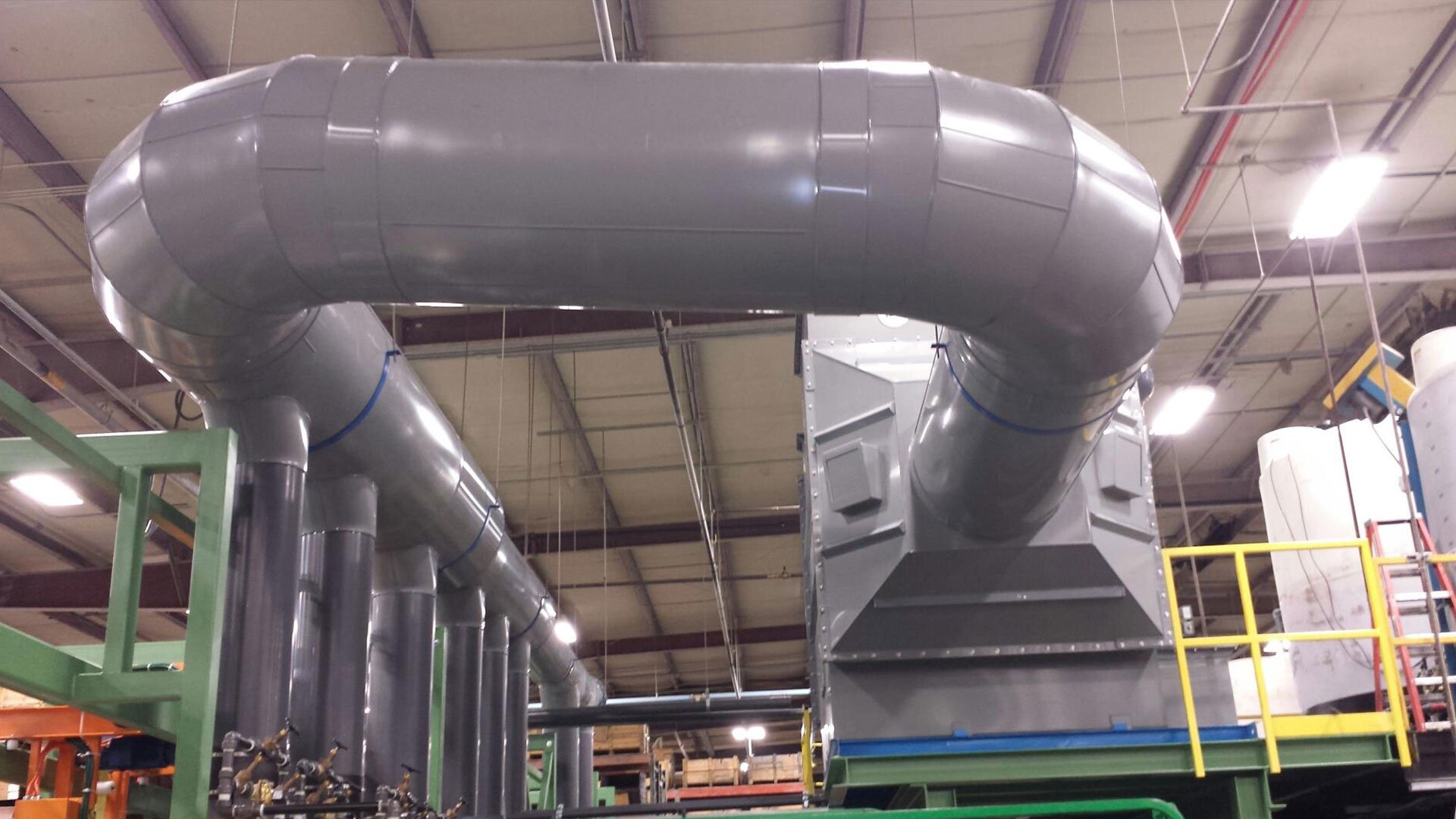
PVC Air Duct
Best for moderate chemical concentrations and straightforward runs. Temperature ceiling: 140°F. Cost-effective, until your application exceeds what it was designed for.
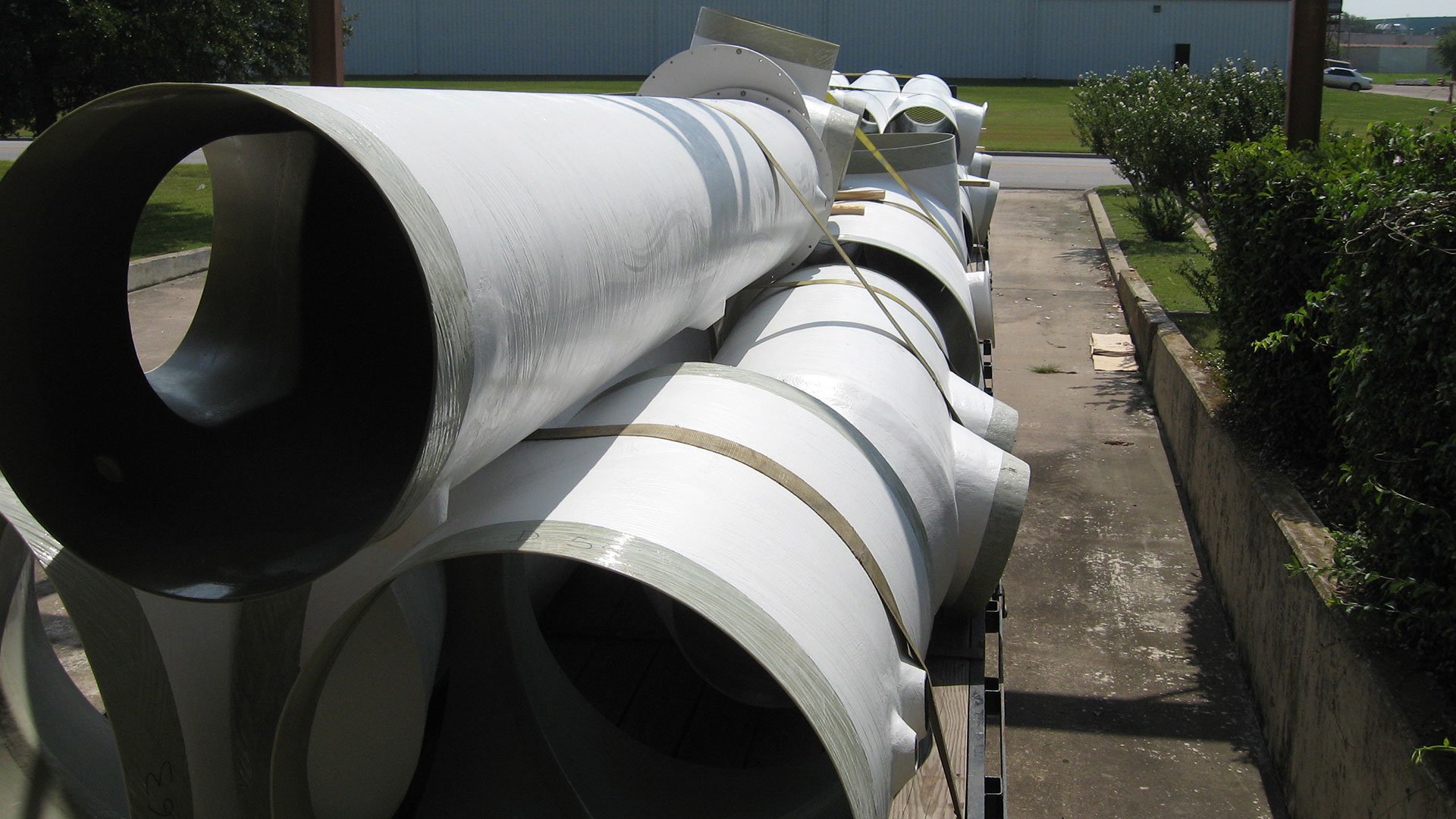
FRP Ductwork
Handles acids, alkalis, and organic solvents that destroy standard materials. Custom fabrication up to 120" diameter. Performs outdoors for 20+ years with proper gel coat. The right call when PVC runs out of answers.
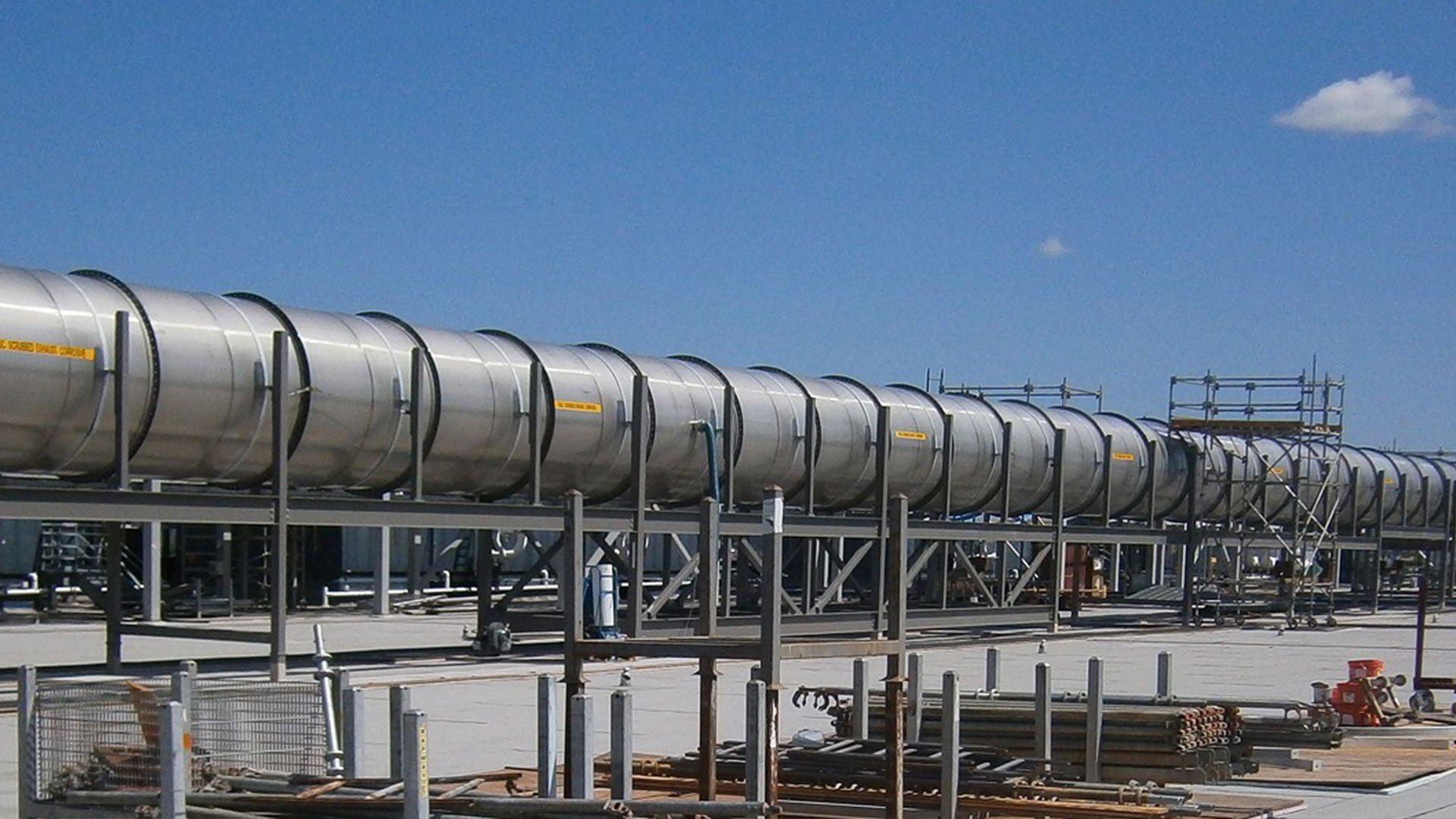
SSTeelcoat
Halar Coated Stainless300°F continuous. Class 1 fire rated. Virtually zero maintenance. When fire rating requirements are non-negotiable—or when you're running the numbers on a 25-year system—this is where the math lands.
The rule most engineers learn late:
Mixed materials create thermal expansion mismatches at flanged connections.
Pick one material family and build the whole system around it.
How to Think Through Material Selection
The decision really starts with what's in the exhaust stream and at what concentration. PVC handles specific chemistries at moderate concentrations well. Once you're dealing with HF, H₂S, concentrated acids, or mixed corrosive streams at elevated temperatures, FRP or SSTeelcoat is the more defensible choice—those conditions simply exceed what thermoplastics were designed to handle.
Temperature is the next variable. PVC has hard limits. FRP handles more. SSTeelcoat's 300°F continuous rating covers applications that eliminate the other two from consideration.
Fire performance requirements can narrow the decision on their own. Class 1 requirements in occupied buildings or semiconductor fab environments point directly to SSTeelcoat regardless of what the chemical compatibility analysis says.
PVC delivers real cost advantages on straightforward, lower-temperature jobs with moderate chemical exposure. Bigger diameters, higher temperatures, complex routing, and outdoor exposure are where FRP takes over. And if you're running the numbers on a system that needs to last 20 to 25 years with minimal maintenance and fire performance built in, SSTeelcoat is usually where the math lands. The facilities that get this wrong don't always realize it until year four or five, when they're pricing an emergency repair instead of a planned expansion.
Does Duct Material Need to Match the Rest of the System?
For FRP-heavy systems, yes. Using FRP ductwork with FRP scrubbers, expansion joints, and tanks gives you compatible thermal expansion properties and consistent corrosion resistance through flanged connections. Mixed-material systems create thermal expansion mismatches at those joints, a common failure point that gets designed around during spec and then shows up in the field years later as leaks.
Viron manufactures complete corrosive air systems—hoods, ductwork, wet scrubbers, fans, dampers, and stacks—in all three material families. It's the only U.S. manufacturer that builds complete corrosive air systems in-house across SSTeelcoat, FRP, and PVC. Single-source design eliminates the multi-vendor coordination problems that surface when components from different manufacturers don't integrate cleanly.
The right material depends on your specific chemistry, temperatures, fire requirements, and project scale. Most of the costly mistakes we see weren't made by people who didn't care; they were made by people who got good advice from a vendor who only builds in one material. If you're working through that decision, talk to someone who has a reason to tell you no.
Ready to discuss your air pollution control requirements? Request a quote for a complete system solution engineered specifically for your application. Viron International has designed and manufactured corrosion-resistant industrial air cleaning systems for over 50 years.