Choosing the wrong scrubber costs more than the purchase price. It costs you downtime when the system can't handle your actual exhaust chemistry, regulatory fines when removal efficiency falls short, and equipment damage when corrosive vapors leak past an undersized unit. Months into operation, you're dealing with problems that proper selection would have prevented.
Industrial wet scrubbers remove harmful gases, vapors, and particulates from exhaust air before releasing it to the atmosphere. But "wet scrubber" covers dozens of configurations, each suited to different contaminants, flow rates, and facility constraints.
Getting the selection right means understanding what drives performance in your specific application.
Key Takeaways
- Exhaust chemistry drives everything. Acid gases need packed bed scrubbers, and articulates need venturi designs, while ammonia needs pH-controlled multistage absorption.
- Building constraints determine your configuration. Vertical towers work well when you have minimal floor space, while horizontal units are ideal for low ceilings and when you want easier maintenance access.
- Multi-vendor sourcing leads to more failures. Single-source manufacturers engineer ductwork, scrubbers, and fans together—one point of accountability where all parts are designed to perfectly integrate.
- Material selection determines your lifespan. PVC: 12-15 years below 140°F. FRP with vinyl ester: 15-25 years in mixed acids. Coated stainless: 30+ years.
Start With Your Contaminant Chemistry
Your exhaust chemistry determines everything else about scrubber selection. Acid gases like hydrofluoric acid or sulfuric acid need packed bed scrubbers with extended contact time between contaminated air and scrubbing solution. Venturi scrubbers excel at particulate removal by creating high-velocity droplet collisions, while ammonia often requires multistage absorption with pH-controlled recirculation.
Semiconductor fabs generate some of the most complex exhaust streams in industrial manufacturing. Process tool exhaust might contain hydrofluoric acid, sulfuric acid, phosphoric acid, and volatile organic compounds—sometimes all from the same tool. Each contaminant responds differently to scrubbing, which is why these applications often need multistage scrubbers with specialized packing materials and precise liquid distribution.
Wastewater treatment facilities deal with hydrogen sulfide concentrations that can reach 500 ppm or higher, especially around headworks and sludge processing. H2S scrubbing typically uses a caustic solution with tight pH control to maintain absorption efficiency while preventing sulfide reaction products that can foul spray nozzles and packing.
Metal finishing operations—chromium plating, zinc electroplating, and anodizing—produce hexavalent chromium mist, cyanide vapors, and acid fumes. These facilities use high‑efficiency wet scrubbers with mist eliminators designed to capture fine chromic acid mist and meet strict EPA hexavalent chromium emission limits while protecting workers from toxic exposure.
Match Scrubber Configuration to Your Space and Flow Requirements
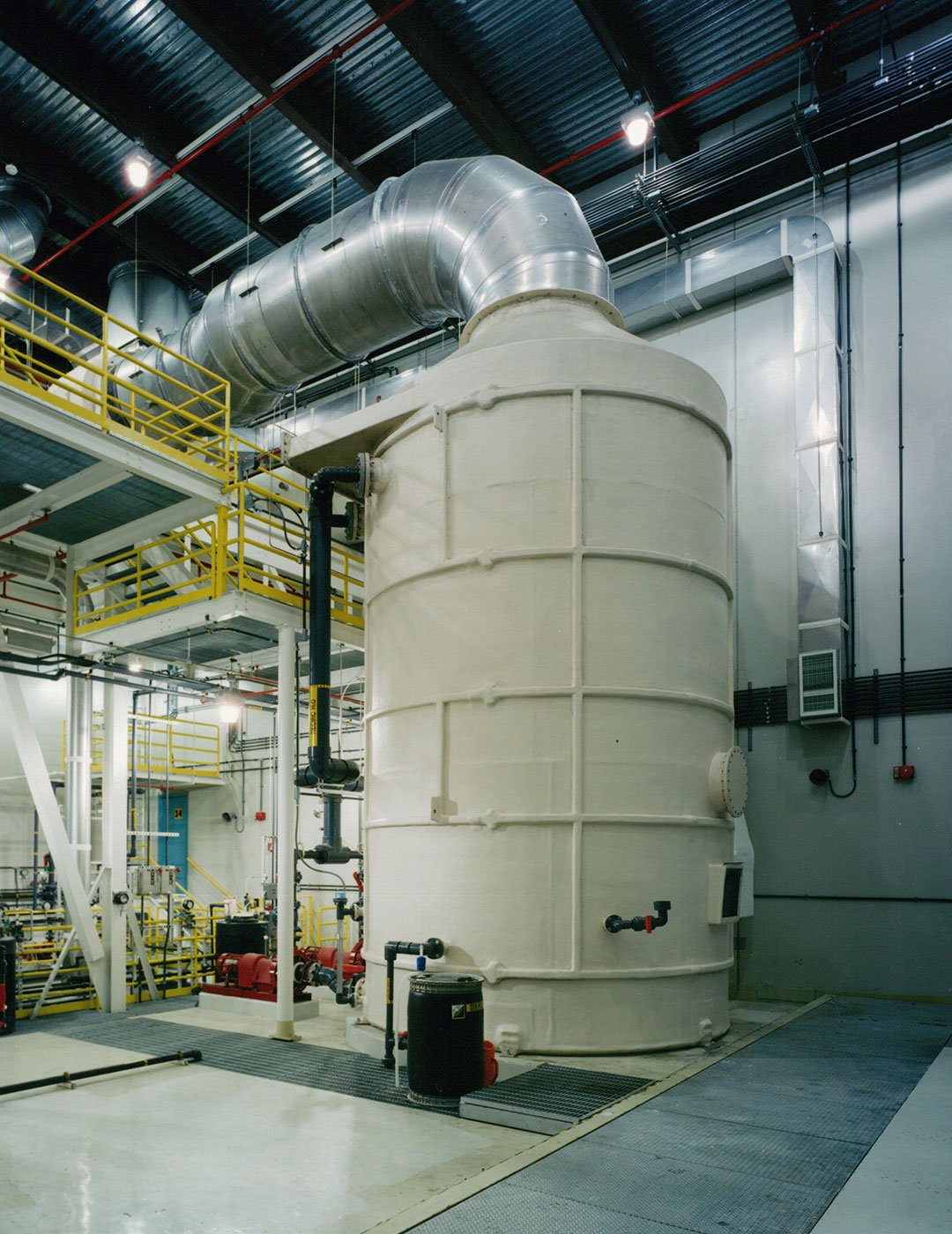
Vertical packed tower scrubbers excel when you need high removal efficiency in a compact footprint. Gas flows upward through packed media while scrubbing solution cascades down, creating countercurrent contact that maximizes mass transfer.
These units typically handle 500 CFM to 100,000 CFM, with packing depths usually from 12 inches to 180 inches, depending on required efficiency. The vertical design suits facilities with adequate ceiling height but limited floor space.
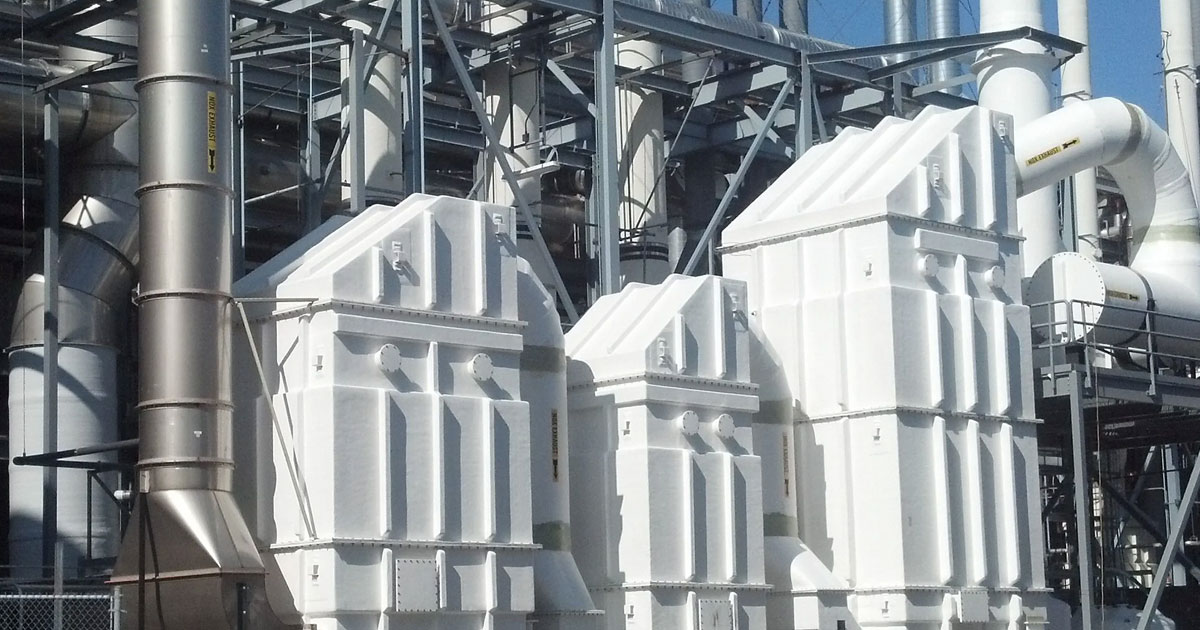
Horizontal crossflow scrubbers work differently—contaminated air flows horizontally through vertically-oriented packed media. This low-profile design fits buildings with height restrictions or rooftop installations where vertical clearance matters.
Horizontal configurations also offer easier access for maintenance, letting technicians inspect packing and spray nozzles without scaffolding or lifts. The trade-off is larger floor space requirements compared to vertical towers.
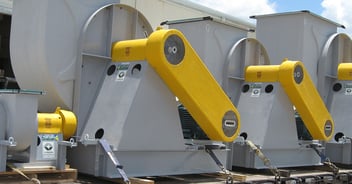
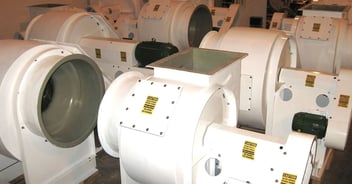
Blower-integrated scrubbers combine fan and scrubber in a single packaged unit. These systems eliminate field coordination between separate fan and scrubber vendors, reducing installation complexity for small to mid-size applications, typically up to around 15,000 CFM.
The integrated design also simplifies troubleshooting—when performance drops, you're working with one manufacturer rather than coordinating between fan supplier, scrubber fabricator, and ductwork contractor.
Pick Your Scrubber Configuration
- Typically handles 500-100,000 CFM.
- Packing runs 12" to 180" deep, depending on what efficiency you need
- Takes minimal floor space but needs 15-40 feet of ceiling height.
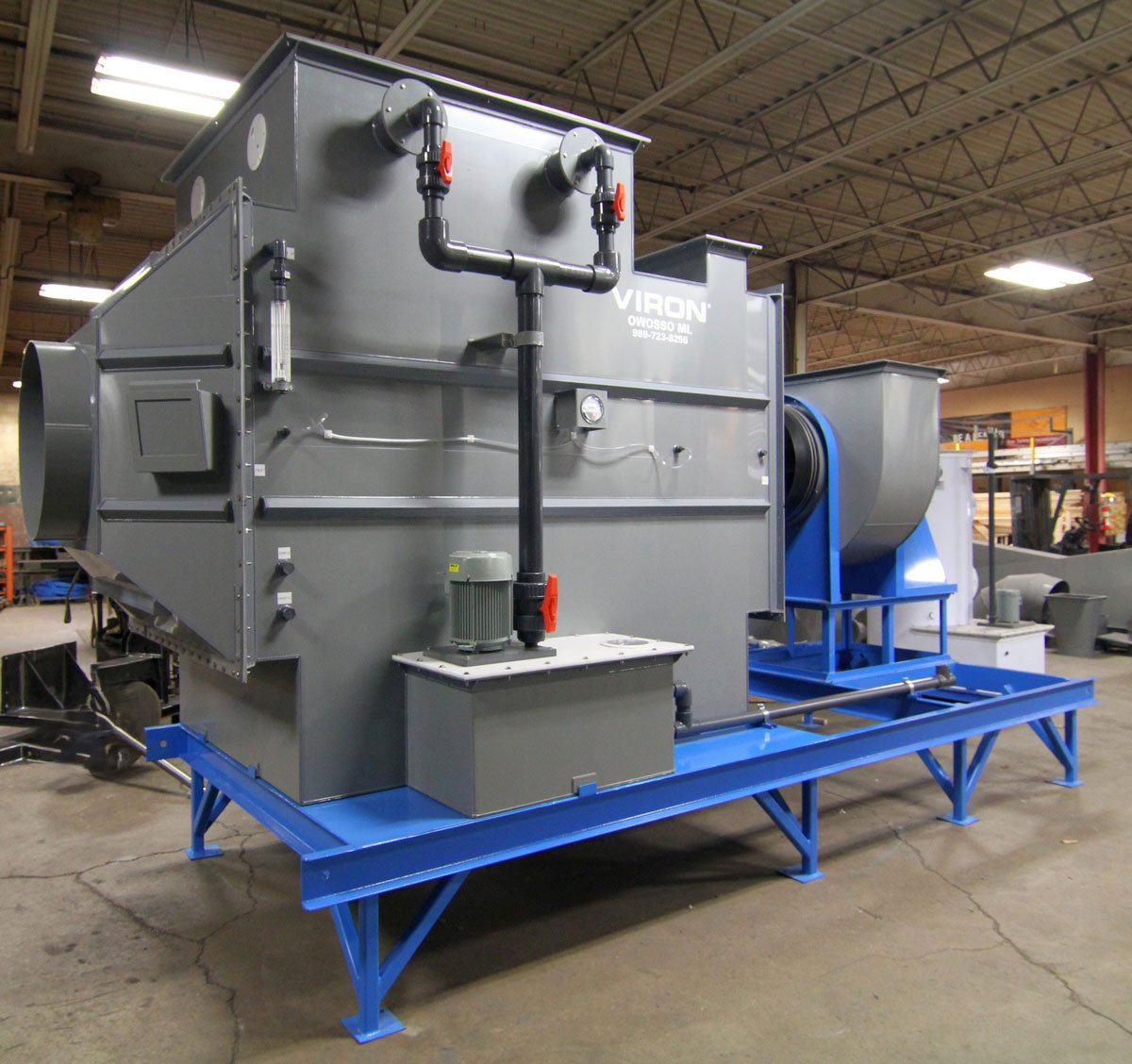
- Low-profile.
- Works on rooftops where cranes restrict vertical clearance.
- Technicians can reach spray headers without scaffolding.
- Trade-off: needs more floor area.
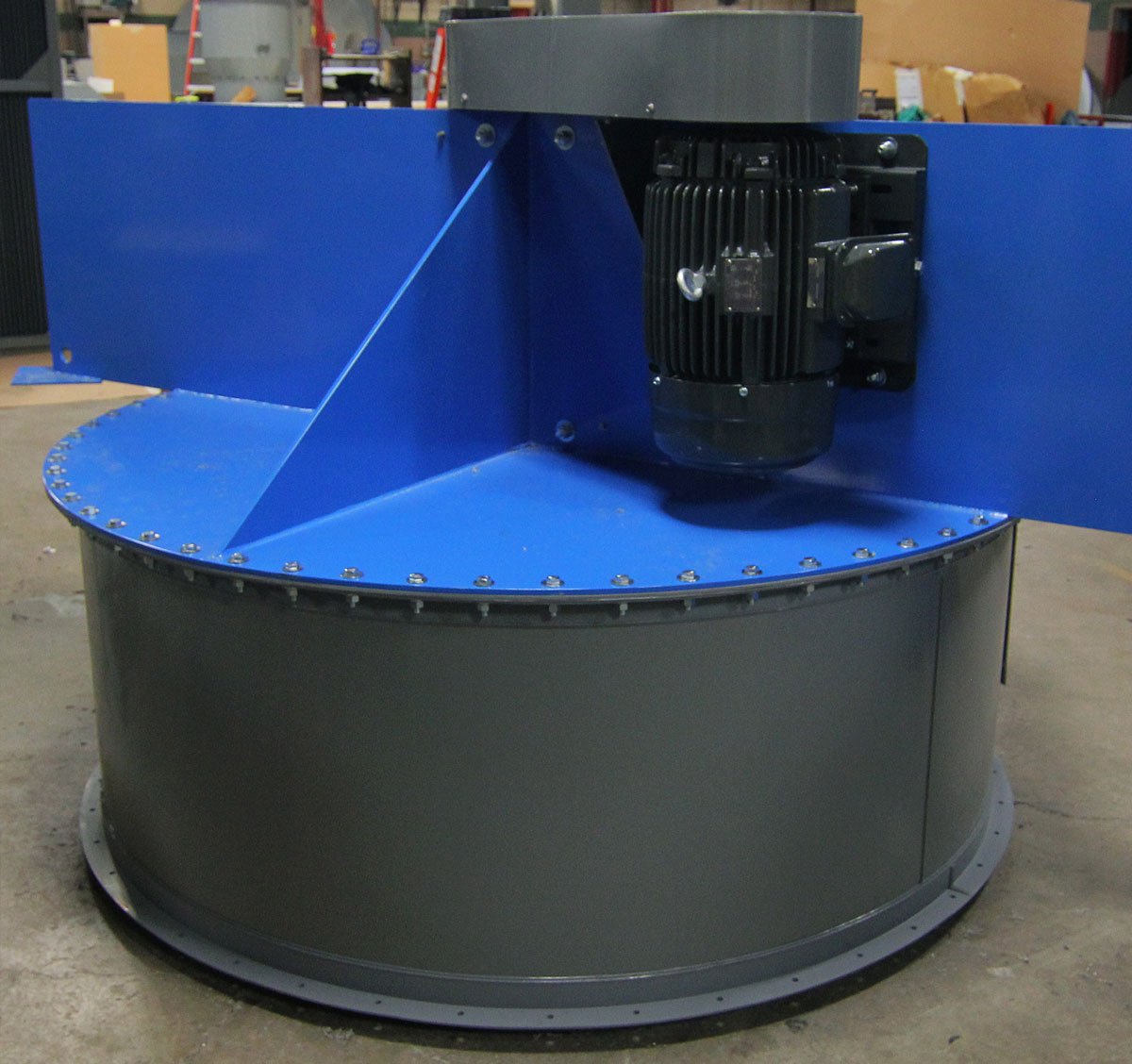
- Fan and scrubber in one package, typically up to 15,000 CFM.
- One vendor.
- One phone number when something breaks.
System Integration Matters More Than Individual Components
Here's where most facility managers discover a problem they didn't anticipate: the scrubber that looked perfect on paper doesn't match the actual system performance.
Pressure drop calculations assumed smooth duct transitions, but the installed fiberglass reinforced plastic ductwork includes three unnecessary elbows that add 2 inches of static pressure. The fan was sized for a clean duct, not the FRP air duct run with multiple fittings between process tools and the scrubber inlet.
Multi-vendor sourcing creates these mismatches. Your duct fabricator optimizes for material cost. Your scrubber supplier designs for the efficiency you specified but doesn't account for actual inlet conditions. Your fan vendor quotes are based on theoretical system resistance. Then you discover none of these components work together as predicted, and each manufacturer points at the others when airflow falls short.
Complete system manufacturers engineer ductwork, scrubbers, and fans simultaneously. When they design your fiberglass reinforced plastic ductwork, they're calculating pressure drops based on the actual scrubber they're building and the specific fan they're selecting. Material compatibility is guaranteed because the same engineering team specifies vinyl ester resin for FRP ductwork and matches it to scrubber housing materials. Thermal expansion coefficients align at every flange connection.
The pharmaceutical facility that needs to handle solvent vapors from coating operations gets an integrated design where the FRP air duct system handles temperature swings from 70°F to 180°F without developing leaks, the scrubber packing material resists the specific solvents in the exhaust stream, and the fan provides adequate pressure to overcome the complete system resistance—including that 30-foot vertical FRP duct run to the rooftop stack.
Material Selection Protects Long-Term Performance
Scrubber housing materials must withstand the corrosive environment inside the unit where contaminated air contacts the scrubbing solution.
PVC works for moderate acid concentrations below 140°F.
Polypropylene handles higher temperatures to 180°F and resists strong acids and caustics.
FRP construction with vinyl ester resin provides the broadest chemical resistance, particularly for mixed acid environments common in electronics manufacturing.
But the scrubber housing is only part of the material story. Your recirculation pumps, spray headers, and instrumentation all face the same corrosive attack. CPVC pumps suit most applications, but high-temperature operations need polypropylene or fiber reinforced plastic construction. Coated stainless steel offers superior mechanical properties but costs significantly more upfront (but saves you money over time) and still requires coating or alloy selection based on specific chemistry.
The aerospace manufacturing facility etching titanium components needs scrubbers and fiberglass reinforced plastic ductwork that handle nitric acid and hydrofluoric acid simultaneously.
Standard PVC typically fails within months (though it depends on exact concentrations and temperatures). This application demands FRP construction with specifically formulated vinyl ester resin, plus spray nozzles and packing material selected for the exact acid concentrations and temperatures in the exhaust stream.
Factor in Efficiency Requirements and Operating Costs
Required removal efficiency directly impacts scrubber sizing and configuration.
Meeting 95% removal efficiency might only require 24 inches of packing depth, while 99% efficiency needs 48 inches—doubling the scrubber height and cost. Regulatory requirements drive these decisions. Semiconductor fabs in California air quality districts, for instance, face stringent limits on hydrofluoric acid emissions, often designed for 98%+ removal efficiency.
Higher efficiency typically means higher operating costs through increased pressure drop and recirculation rates.
Most packed bed scrubbers operate at 100-400 feet per minute gas velocity through packing and use 2-10 GPM of recirculation per square foot of packing area. Pushing efficiency requires more packing depth, which increases fan horsepower to overcome added resistance; it also demands more spray nozzles and higher recirculation rates to maintain liquid coverage across the packing.
Battery manufacturing plants scrubbing sulfuric acid mist from formation operations face this efficiency versus operating cost trade-off constantly. They need high removal rates to protect workers and meet emissions limits, but the large exhaust volumes mean every inch of water column in pressure drop translates to significant annual energy costs.
Proper scrubber selection balances these factors—achieving required efficiency without oversizing the unit and wasting operating budget.
Viron's Complete System Approach to Industrial Air Cleaning
For more than 50 years, Viron has engineered complete air cleaning systems for facilities where corrosive exhaust demands reliable performance. We manufacture every component—vertical and horizontal scrubbers, blower-integrated units, fiberglass reinforced plastic ductwork, centrifugal fans, dampers, and instrumentation—in our Texas and Michigan facilities.
This integrated approach means semiconductor manufacturers get systems where FRP air duct material selection matches scrubber construction, fan curves account for actual system resistance, and one engineering team coordinates the complete installation.
When facilities need odor control systems for wastewater treatment, our engineers design scrubbers specifically for H2S removal integrated with properly sized ductwork and fans. Chemical processing lines rely on our complete systems approach to handle mixed acid streams without the vendor coordination headaches.
Selecting industrial wet scrubbers requires matching technology to your specific contaminants, flow rates, space constraints, and efficiency requirements. But individual component selection isn't enough—the complete system must work together. That's where Viron's 50+ years of manufacturing experience and complete system capability protect your investment while delivering the performance your facility demands.
Ready to discuss your air pollution control requirements? Request a quote for a complete system solution engineered specifically for your application.