Corrosive air doesn't announce itself. It just starts eating through your ductwork from the inside out—quietly, persistently—until you're dealing with leaks nobody saw coming or equipment damage that stops production cold. Facility managers know this particular headache well: in the morning you discover that what looked fine on the outside has been deteriorating for months on the inside.
By then, you're not making decisions anymore. You're scrambling.
Ductwork selection may seem routine, but it directly affects:
- Equipment protection
- Regulatory compliance
- Worker safety
- Uptime reliability
- Total lifecycle cost
Fiberglass reinforced plastic (FRP) ductwork has become the workhorse solution for industrial facilities operating in aggressive chemical environments. This guide explains when FRP makes sense, how it compares to alternatives, and what determines long-term performance.
Key Takeaways
- Material construction matters. FRP air duct quality depends on a resin-rich inner surface and consistent quality-controlled wall thickness. Inconsistent walls create failure points.
- Fiberglass reinforced plastic fills the middle ground. Thermoplastics cost less but lack temperature/UV resistance. Coated stainless steel offers fire ratings but costs more. FRP balances performance and suits custom fabrication.
- Having a single-source system eliminates all sorts of problems. Single-source manufacturers design integrated systems, preventing the finger-pointing and compatibility issues that plague multi-vendor sourcing.
- Chemical resistance requires precise matching. FRP effectiveness depends on matching specific vinyl ester resins to your chemical exposure through proper exhaust analysis.
What Is Fiberglass Reinforced Plastic (FRP) Ductwork?
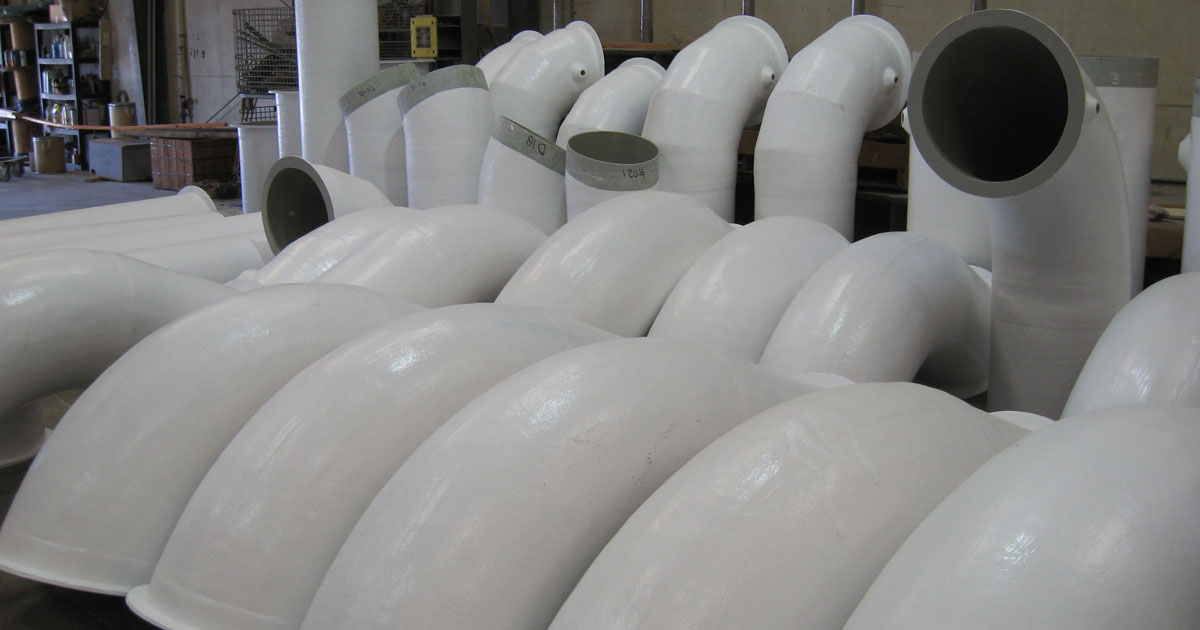
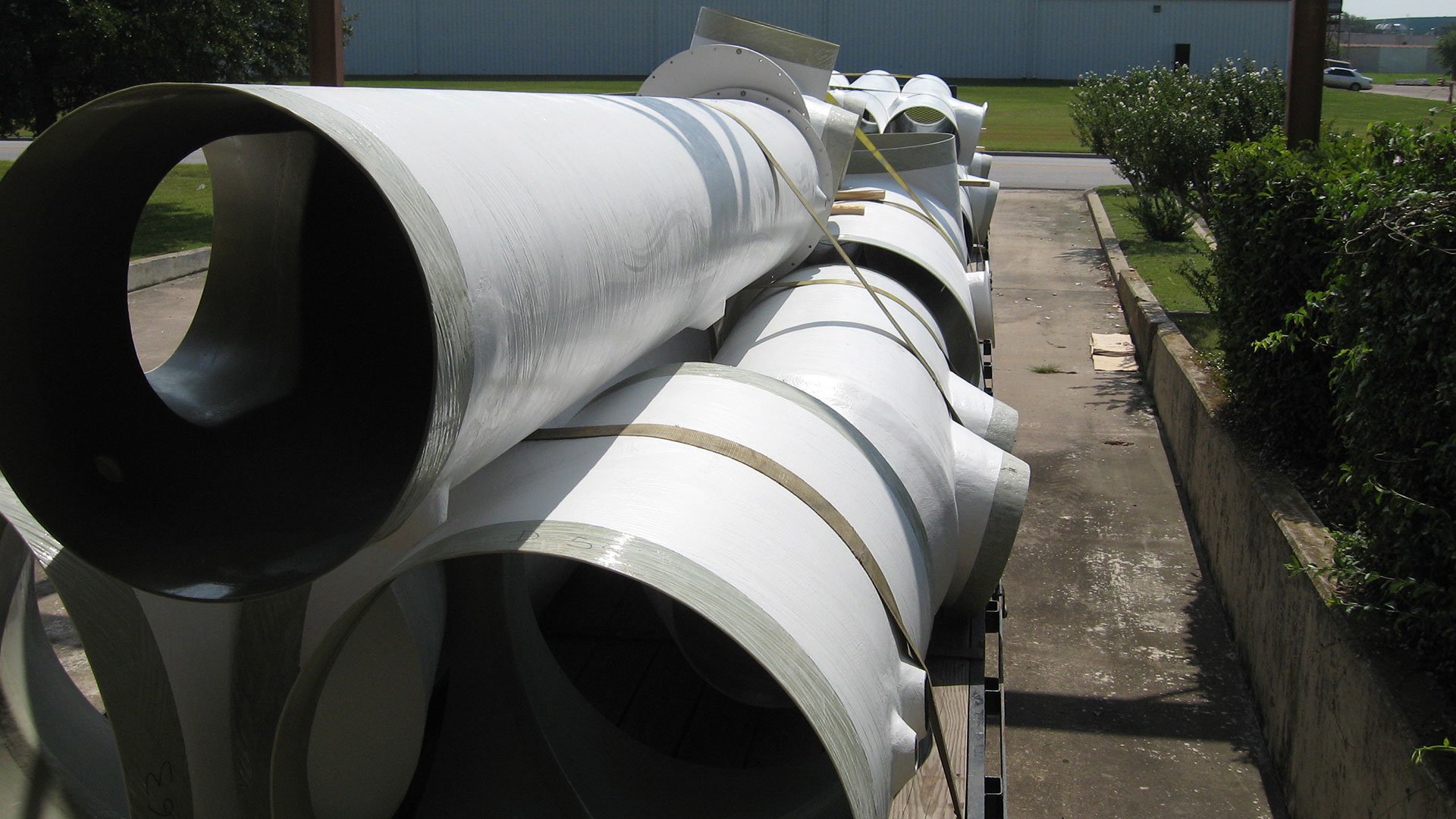
Fiberglass reinforced plastic ductwork combines two materials that wouldn't do much individually but work together surprisingly well. Glass fibers provide the structural backbone—the part that keeps a 48-inch diameter duct from sagging between hangers. The polymer resin matrix, usually vinyl ester or specialized polyester, bonds everything together while creating the chemical barrier that stops acids and solvents from destroying the material.
And here's where manufacturing quality matters: the layering process separates systems that last from those that fail prematurely. Quality fabrication creates a resin-rich inner surface—that's 90% resin and only 10% glass. This veil layer takes the direct chemical hit while keeping fibers protected.
Then come the structural layers, built up with chopped strand mat or woven roving, each carefully impregnated with resin at controlled ratios.
Computer-controlled filament winding machines for round duct achieve wall thickness precision that hand layup simply cannot match. Consistent thickness means consistent performance. When one section of duct has thinner walls, that's where your system develops problems later.
Where Does FRP Air Duct Make Sense?
FRP ductwork serves industrial environments where corrosive gases, acids, and solvents make traditional materials fail prematurely.
Semiconductor fabs create some of the nastiest exhaust streams in industrial manufacturing, especially with high-tech electronics. You're dealing with hydrofluoric acid, sulfuric acid, phosphoric acid—sometimes all in the same process tool exhaust. Add in volatile organic compounds and process gases, and you've got a chemical cocktail that destroys standard materials.
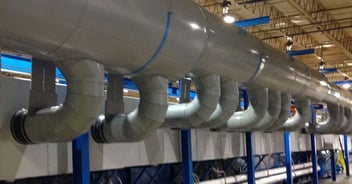
FRP air ductwork handles these environments when vinyl ester resin formulations are properly selected for the specific chemical exposure. The material also provides the structural capacity you need for large-diameter runs and complex routing through multi-story fab buildings.
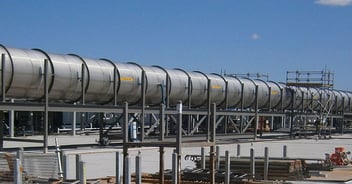
Water and wastewater treatment plants face different problems but need similar solutions. Hydrogen sulfide gas corrodes metal aggressively, and smell complaints from neighbors don't help community relations. FRP systems handle the corrosive environment while standing up to outdoor installation requirements—UV exposure, temperature swings, weather. The material doesn't rust and doesn't need painting.
Chemical processing, metal finishing, pharmaceutical manufacturing, battery production—these industries all generate exhaust streams too aggressive for ordinary materials, but they can't afford ventilation systems that become maintenance nightmares. FRP air duct bridges that gap across applications from chrome plating to food processing facilities where certain acids create surprisingly corrosive conditions.
Making the Right Material Choice (Because FRP Air Duct Isn't Always the Answer)
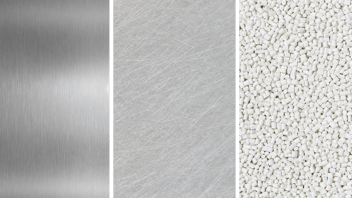
Three material families compete for corrosion-resistant ductwork projects, and understanding when each makes sense saves you from either overspending or getting the wrong solution.
Thermoplastic materials (PVC) work well for specific applications—certain acids, straightforward routing. Cost advantages exist here, particularly for smaller projects with moderate chemical concentrations. But thermoplastics hit walls quickly with temperature limits and structural limitations, which means you need more supports for large diameters. Their lower stiffness and higher thermal expansion typically require closer support spacing, especially at elevated temperatures and on long runs.
UV degradation becomes a real problem outdoors, as well. Unprotected thermoplastic duct exposed to sunlight can experience UV-driven degradation over time, so outdoor runs usually require UV-stabilized materials, dark pigments, or shielding.
Coated stainless steel systems—stainless substrate with internal fluoropolymer coatings—offer fire‑performance and installation advantages that fiberglass reinforced plastic typically cannot match. Fire ratings hit Class 1 requirements that some building codes demand. Installation goes faster with bolt-together flanges. Field modifications don't require specialized procedures or cure times. The tradeoff? Higher cost, and performance in extremely corrosive environments depends entirely on coating integrity.
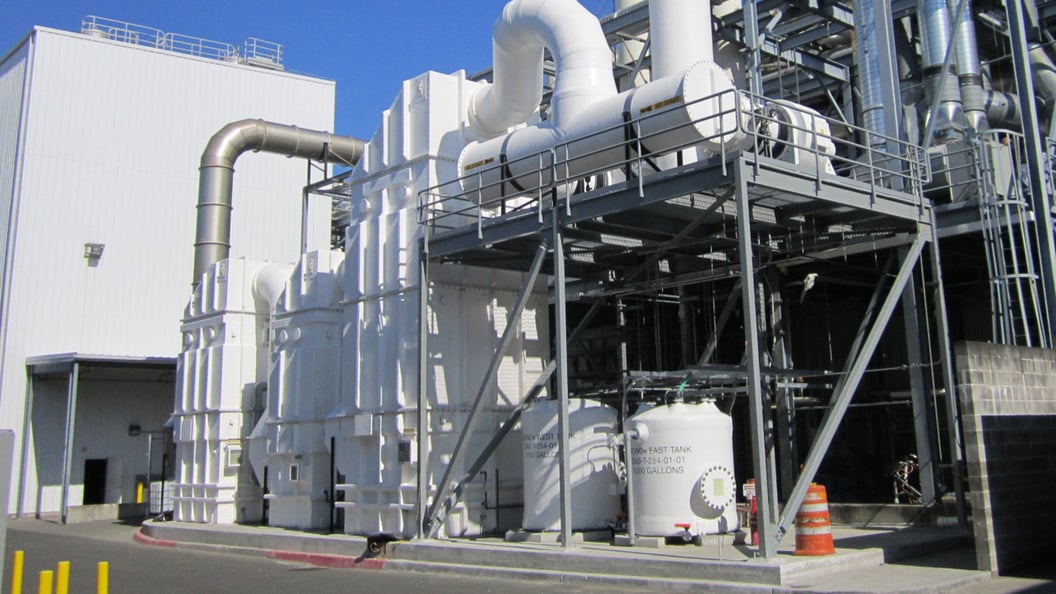
Fiberglass reinforced plastic (FRP) occupies the middle zone. FRP air duct systems designed for outdoor use generally provide very good weathering and UV resistance, often outperforming many standard thermoplastics that lack UV stabilization. For applications requiring custom fabrication, complex geometries, or integration with FRP scrubbers and other equipment, material compatibility simplifies design and eliminates thermal expansion mismatches at connections.
Using FRP duct with FRP scrubbers, tanks, and expansion joints is common practice in chemical and air‑pollution‑control systems, and material compatibility (similar corrosion resistance, similar thermal properties) simplifies design details and helps avoid serious thermal expansion mismatch at flanged connections versus mixing steel and plastic.
Performance Factors That Determine Longevity
Wall thickness in FRP ductwork follows industry standards based on diameter and operating conditions. A 24-inch duct pulling 10 inches of water column vacuum needs walls thick enough to resist collapse. A 48-inch diameter duct at atmospheric pressure has different structural requirements. Pressure ratings, vacuum ratings, and mechanical load capacity all feed into thickness specifications documented in industry standards like National Bureau of Standards PS 15-69 or SMACNA’s Standards for Thermoset FRP Duct.
It’s worth noting, however, that while PS 15‑69 does include minimum wall‑thickness tables and general requirements for custom contact‑molded reinforced‑polyester duct and pipe, detailed thickness versus pressure/vacuum ratings are often provided in each manufacturer’s engineering guide. They’re not always spelled out numerically in PS 15‑69 itself.
The laminate buildup matters. A resin‑rich inner corrosion barrier—typically on the order of 100 mils thick—provides chemical resistance, backed by chopped strand mat layers that build thickness and control wicking while maintaining consistent properties. Structural plies add strength, and an exterior resin‑rich surface or gel coat with UV inhibitors protects against weathering in outdoor installations, so each layer serves a distinct purpose.
Joint design separates reliable installations from leaking disasters. Bell and spigot joints need proper insertion depths based on perimeter dimensions, with overwrap that equals or exceeds parent duct strength. Flanged connections require sufficient width, appropriate bolt spacing, and faces perpendicular enough to compress gaskets evenly. Temperature cycling and vibration stress joints constantly. Weak joints fail first.
The System Integration Reality (Why Ductwork Never Works Alone)
Most facility managers learn this lesson the expensive way: ductwork operates as part of a system, not as a standalone product. The scrubber removing contaminants from your exhaust, the fan moving air through the system, the dampers controlling flow—all these components must work together.
Material compatibility matters at every connection point. Thermal expansion coefficients need to match or you'll get leaks at flanges when temperature changes.
Here's what happens with multi-vendor sourcing: you buy your FRP ductwork from one manufacturer, your scrubber from another, your fan from a third supplier.
Then performance problems start. Airflow doesn't match design. Pressure drops exceed predictions. Components don't fit together properly. Now you're in the blame game. The scrubber manufacturer points at inadequate fan capacity. The fan supplier questions the ductwork's resistance calculations. The duct fabricator challenges the scrubber's pressure drop specs. Meanwhile, your facility sits offline while consultants review competing technical claims.
Single-source system manufacturers, on the other hand, eliminate this mess. They calculate fan curves based on actual system resistance, including every fitting, the real scrubber pressure drop, stack effect. They design duct walls for the pressure and vacuum conditions that their integrated system creates.
When something goes wrong—because something always eventually goes wrong—you call one company that understands the complete system.
The installation and maintenance advantages compound over years. One set of documentation instead of three. Single inventory source for replacement parts. System modifications don't require re-engineering interfaces between incompatible components.
Installation Requirements for FRP Air Duct Systems
Field modifications present challenges worth understanding during design. Coated stainless steel can be cut and re-flanged on site. FRP requires proper cutting procedures, edge reinforcement, and leak-tight connection methods that require cure time. This makes accurate initial design critical. Planning for future expansions? Factor this limitation into material selection.
Periodic inspection should examine joints for leakage or resin degradation and verify that the outdoor gel coat remains intact for UV protection.
The FRP Ductwork Decision Matrix
Three Material Options:
- limited temperature range
- requires frequent supports
- UV degrades outdoors

- handles complex geometries
- computer-controlled precision
- excellent outdoor durability

- Class 1 fire rating
- easy field modifications
- superior impact resistance
Why Viron's FRP Air Systems Deliver Decades of Performance
Viron brings over 50 years of expertise in manufacturing corrosion-resistant air handling systems to every FRP project. Our 65,000 square-foot Texas facility uses advanced filament winding equipment and follows stringent quality standards conforming to SMACNA and National Bureau of Standards PS 15-69. The result is consistent, high-performance fiberglass duct built to meet demanding industrial and high-tech environments.
Three factors separate our FRP ductwork from what you'll find elsewhere.
- First, we manufacture complete air cleaning systems, not individual components. When we engineer your ductwork, we're simultaneously designing scrubbers, fans, and dampers that must work together. This system approach eliminates compatibility problems and accountability gaps. No finger-pointing when airflow doesn't match predictions; we're responsible for the complete system performance.
- Second, our manufacturing spans all corrosion-resistant materials. We fabricate FRP ductwork, coated stainless steel systems, and thermoplastic installations. This material breadth means our engineers recommend FRP when it genuinely represents your optimal solution, not because it's our only option. We understand performance boundaries across material families. Some applications need coated stainless steel's fire ratings or easier field modification. Others work better with thermoplastics. We're not pushing you toward FRP if another material serves you better.
- Third, Viron's application engineering team has solved air handling challenges across virtually every industrial sector where corrosion matters. Semiconductor fabs. Wastewater treatment plants. Chemical processing. Metal finishing. Pharmaceutical manufacturing. Battery production. This accumulated experience means we design systems that work the first time.
Our FRP duct systems use vinyl ester resins for chemical resistance when appropriate, proper veil liner construction for maximum corrosion protection, and Class I flame ratings when fire safety demands it. We custom-fabricate from 4-inch diameter up to 120 inches and larger, with engineering capability for complex geometries, outdoor installations, and integrated designs.
When you work with Viron on FRP ductwork, you're accessing engineering expertise, manufacturing quality, and system integration capabilities that protect your equipment investment. While delivering reliable performance in harsh industrial environments.
Viron designs and manufactures custom industrial air cleaning systems for every major industry, with every product available in SSTeelcoat, fiberglass, and PVC. Request a custom quote for your duct system today.