The purchase order is only the beginning.
For procurement teams, the upfront material number is the one that gets scrutinized—understandably. Capital expenditures require justification, and lower bids are easier to defend. Plant and facilities engineers tend to see it differently. They are the ones managing inspection schedules, sourcing repair bonding materials at 2 a.m., and explaining to the plant manager why ductwork installed eight years ago needs to come out.
Both perspectives are valid. The question is which cost you're optimizing for.
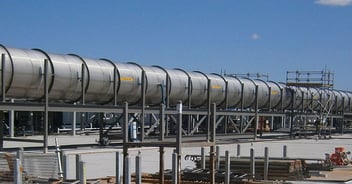
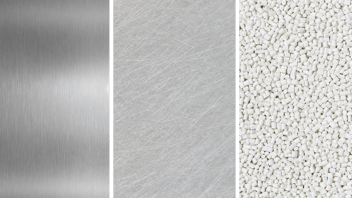
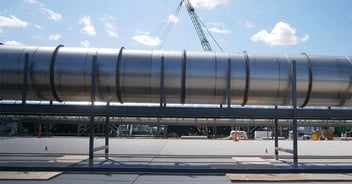
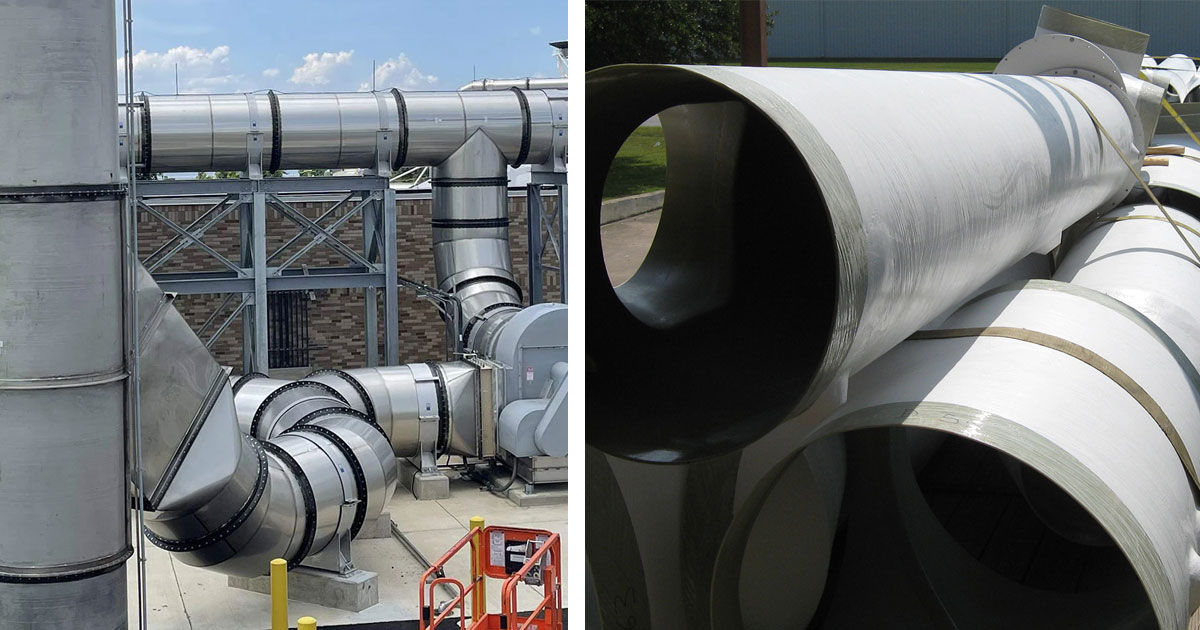
Two materials dominate corrosion-resistant ductwork: fiberglass reinforced plastic (FRP) and coated stainless steel ductwork—specifically, Viron's SSTeelcoat™, built on a 304 or 316 stainless steel substrate with a Halar® (ECTFE) interior coating. Both handle corrosive exhaust streams that destroy carbon steel or standard PVC.
But they age differently, install differently, and carry very different cost profiles across a 20- to 30-year system life.
Viron manufactures both coated stainless steel and FRP duct systems as part of complete air handling solutions that include scrubbers, fans, dampers, and controls. That system-level perspective—built on more than 50 years of corrosive air experience—is what allows us to evaluate material decisions based on application fit, not material bias.
Key Takeaways
- FRP air duct costs less upfront; SSTeelcoat costs less to own over a 20-to-30-year service life.
- FRP's rated service life is resin and exposure dependent. SSTeelcoat's 30-year rating carries no such qualifier.
- SSTeelcoat's Class 1 fire rating can eliminate internal sprinkler requirements, offsetting its higher upfront material cost.
- Improperly bonded FRP field joints often don't fail until years after installation, when the contractor is long gone.
- FRP absorbs process chemicals over time; at the end of service, it's frequently classified as hazardous waste.
FRP Air Duct: Lower Upfront Cost, Real Tradeoffs
Fiberglass reinforced plastic ductwork costs less upfront—often meaningfully so on large-diameter runs—and FRP fabricators can produce complex custom geometries from 4" to 120"+ diameter.
When vinyl ester resins are properly specified, FRP handles a wide range of chemical exposures. With outdoor gel coat for UV protection, it’s a proven material with decades of field history.”
For projects where upfront budget is constrained, and chemical exposure is well-defined, FRP is a legitimate, well-supported choice—not a compromise.
In fact, many complete Viron systems incorporate FRP successfully where the application, code environment, and lifecycle expectations align with its performance profile. The right answer depends on the project—not on forcing a single material into every scenario.
That said, the tradeoffs are real—and they accumulate over time.
FRP's rated service life carries an important qualifier: "20+ years—resin and exposure dependent." That caveat is doing significant work. Real-world performance varies based on fabrication quality, chemical concentration, temperature excursions, and whether field modifications were executed correctly. Field cuts require proper edge reinforcement and bonding technique, with cure time built in.
Get that wrong during installation and the failure doesn't show up immediately—it shows up three or four years later when nobody can remember who made the joint or how.
Ongoing inspection requirements are significant. Joints must be checked for leakage or resin degradation, and outdoor gel coat verified for UV integrity. Those inspections consume labor hours and, when they find something, drive repair costs—none of which appears on the original purchase order.
One more line item that rarely gets factored in at spec time: FRP absorbs process chemicals into the duct wall over decades of service. At the end of life, that material is often classified as hazardous waste. Disposal costs are real, and they belong in the TCO calculation.
SSTeelcoat: Higher Upfront, Lower Post-Installation Costs
A global high-tech and electronics company specified SSTeelcoat for the RFAB2 fab tool hookup—a $20M project. A municipal water and wastewater system used by 2.5 million people recently went with SSTeelcoat for its ductwork, as well. Both are high-demand, code-sensitive environments where system reliability over a long service life outweighs the premium on initial material cost.
SSTeelcoat's typical rated service life is 30+ years—no resin qualifier, no exposure caveat. The Halar ECTFE interior coating doesn't absorb chemicals into the duct wall, which means, at the end of service, SSTeelcoat is not classified as hazardous waste. It can actually be disassembled and reused if system layouts change.
Maintenance is effectively zero. No joint resin degradation to inspect. No gel coat to check. The bolt-together flanged Van Stone connection system requires standard installation skills—no specialized bonding technique, no resin mixing, no cure time. That matters during installation, and it matters every time a field modification is needed. SSTeelcoat can be cut and re-flanged on-site without the specialized procedures FRP requires.
Temperature tolerance is a harder boundary than most procurement decisions account for. FRP typically maxes out around 250°F. SSTeelcoat handles 300°F continuously. In most exhaust applications, this gap doesn't come into play—but in high-temperature process exhaust environments, FRP gets disqualified entirely.
Fire Code: Where the Cost Equation Can Flip Completely
SSTeelcoat carries a Class 1 fire rating per ASTM E-84, with smoke ratings below 50. It complies with NFPA 820 and FM 4922. In many applications, that compliance eliminates the requirement for internal fire sprinklers within the ductwork—a line item that doesn't appear in the duct material comparison but absolutely belongs in the project cost calculation. Insurance premium reductions in NFPA 820-applicable facilities can be significant.
FRP is a combustible composite. Code approval is conditional—jurisdiction and application dependent. In code-sensitive environments like semiconductor fabs, wastewater treatment plants, or pharma research facilities, "conditional" means additional engineering review, supplemental suppression systems, or outright disqualification. The compliance path for SSTeelcoat is straightforward. For FRP, it requires project-specific determination.
When you add sprinkler elimination savings to the TCO model, the upfront premium for SSTeelcoat narrows faster than most procurement comparisons show.
Running the Real Numbers
The structure of the TCO comparison is consistent across applications even when specific figures vary by project size:
FRP carries lower initial material cost. SSTeelcoat carries higher initial material cost, offset by zero ongoing maintenance, 30+ year service life, potential sprinkler elimination, reduced installation labor risk, and end-of-life disposal savings.
[Doug: please insert verified cost differential range between SSTeelcoat and FRP on comparable diameter/run length, and any data on sprinkler elimination savings where applicable. These placeholders are flagged for your input before publication.]
The crossover point—where SSTeelcoat's lifecycle savings offset the upfront premium—depends on project size, chemical exposure severity, and applicable fire codes. In code-sensitive applications, that crossover often happens faster than expected. In straightforward, budget-driven projects with favorable code conditions, FRP may genuinely be the right answer.
SSTeelcoat vs. FRP Duct: What the Purchase Order Doesn't Show
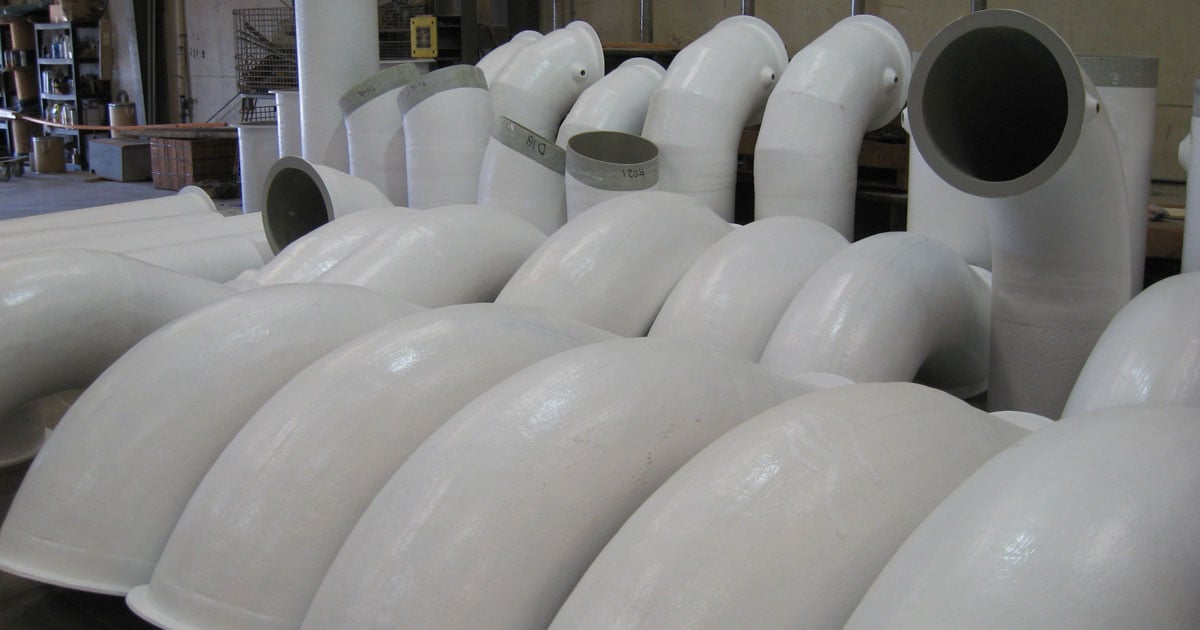
FRP Air Duct
- ✓Lower upfront material cost
- ✓Custom fabrication from 4"–120"+ diameter
- ✓Proven chemical resistance with vinyl ester resins
- ✗Service life: 20+ years—resin and exposure dependent
- ✗Requires periodic joint and gel coat inspection
- ✗Specialized field modification procedures
- ✗Absorbs process chemicals—often classified as hazardous waste at end of service
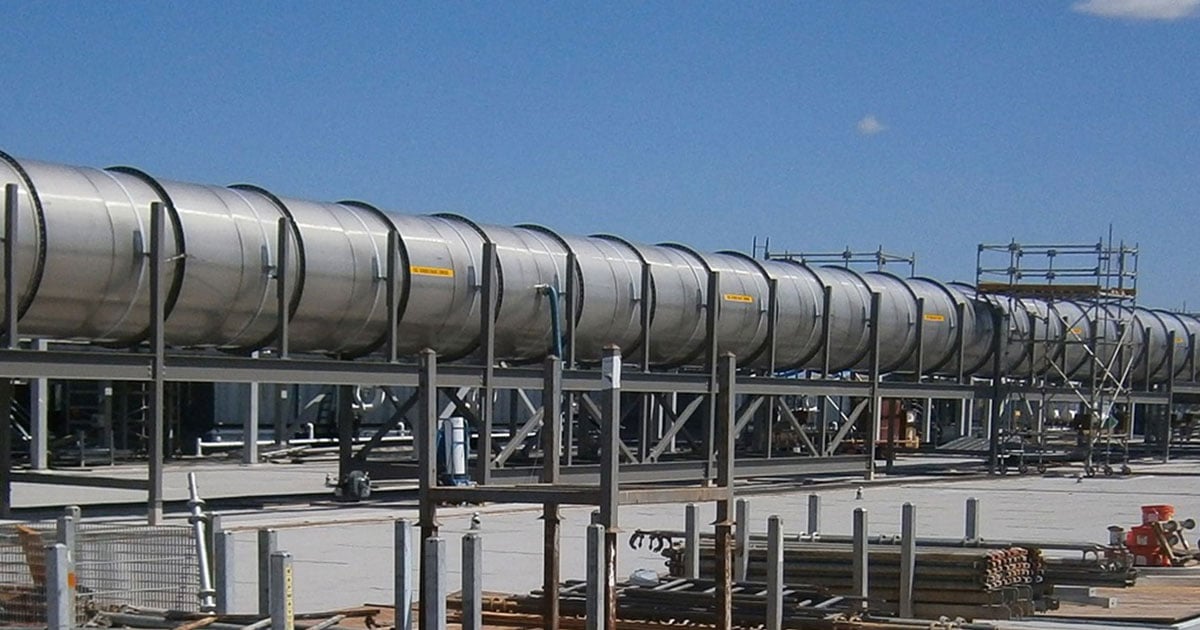
SSTeelcoat Coated Stainless Steel
- ✓30+ year service life—no resin qualifier
- ✓Virtually zero maintenance
- ✓Bolt-together flanged installation—no bonding, no cure time
- ✓Handles 300°F continuous
- ✓Class 1 fire rated per ASTM E-84
- ✓NFPA 820 and FM 4922 compliant—can eliminate internal sprinkler requirements
- ✓Not classified as hazardous waste at the end of service
The bottom line: FRP costs less to buy. SSTeelcoat costs less to own.
Which One Is Right for Your Project?
The procurement team that bought the lower-cost FRP option made a defensible decision. The plant engineer who inherited that system a decade later—managing inspection cycles, tracking resin degradation, sourcing bonding materials—is working with the consequences of that decision every day.
Neither outcome is inevitable. The right answer depends on your chemical exposure, temperature profile, applicable fire codes, and whether you're optimizing for the capital budget or the operating budget. Those are different problems with different right answers.
If you want to work through the real TCO model for your specific application—materials, temperatures, system size, and code requirement —Viron's engineers have been doing this for over 50 years. We've spec'd FRP for projects where it was genuinely the right call, and SSTeelcoat where the lifecycle math made that the clear answer.
Viron manufactures both SSTeelcoat and FRP ductwork. So, when we recommend one over the other, it's based on your application, not our material margins. Tell us your chemical exposure, temperature profile, and compliance requirements, and we'll tell you which one makes more sense.
Request a consultation today.