
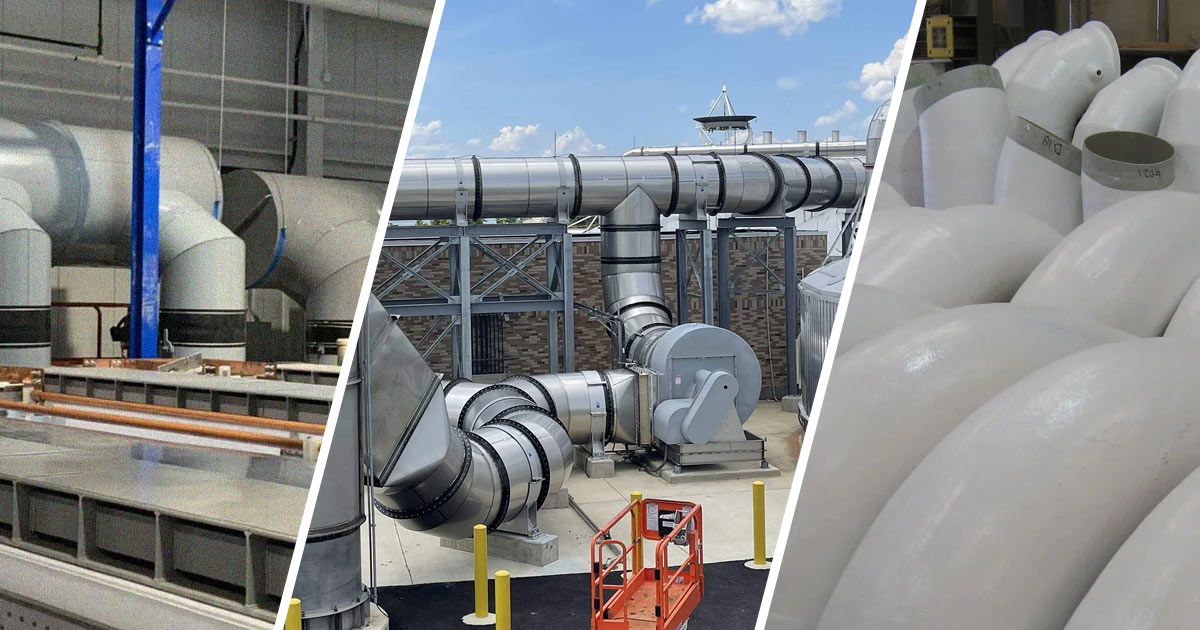
One of our contractor customers only ever called us for fiberglass duct. It was the first thing they'd bought from us, so as far as they knew, it was all we made. They found out we also built coated stainless steel and thermoplastic duct after a job that needed it.
And they're not the only ones. Some customers know us as a fiberglass shop. Others think we only make PVC, or only coated stainless steel, and all of them are right based on what they've experienced.
That misunderstanding comes at a real cost on future projects. A job that requires multiple duct materials might get split between different suppliers, or a material might be chosen simply out of habit rather than based on the specific stream it needs to handle.
Key Takeaways
- Viron makes corrosion resistant ductwork in five materials, so one call can cover a mixed-material duct scope.
- SSTeelcoat coated stainless is our first recommendation for process exhaust and our biggest product line.
- FRP is still the right call for many scrubber yards, low-concentration streams, and budget-driven jobs.
- PVC, CPVC, and polypropylene fit lower-temperature streams in work like metal plating, metal finishing, and aerospace.
- Chemistry, concentration, temperature, and fire requirements decide the material, so bring them to us early.
One Manufacturer, Five Duct Materials
Search for corrosion resistant ductwork and a lot of what comes up is from companies that make one material. A fiberglass shop makes the case for fiberglass. A PVC supplier makes the case for PVC. That's fair, since it's what they build, but it means you only hear one answer.
We manufacture corrosion resistant ductwork in all five: SSTeelcoat coated stainless steel, fiberglass reinforced plastic (FRP), PVC, CPVC, and polypropylene. If a job calls for more than one, it can go on one quote, and you're coordinating deliveries with one manufacturer instead of two.
We can also install end caps on duct taps before the duct leaves our shop, so your crew isn't doing it on site. On a run with 40 taps, that adds up to hours. When an unusual run is easier to assemble in our shop than in the field, we'll build it there.
Where Each Material Belongs
Coated Stainless Steel (SSTeelcoat)
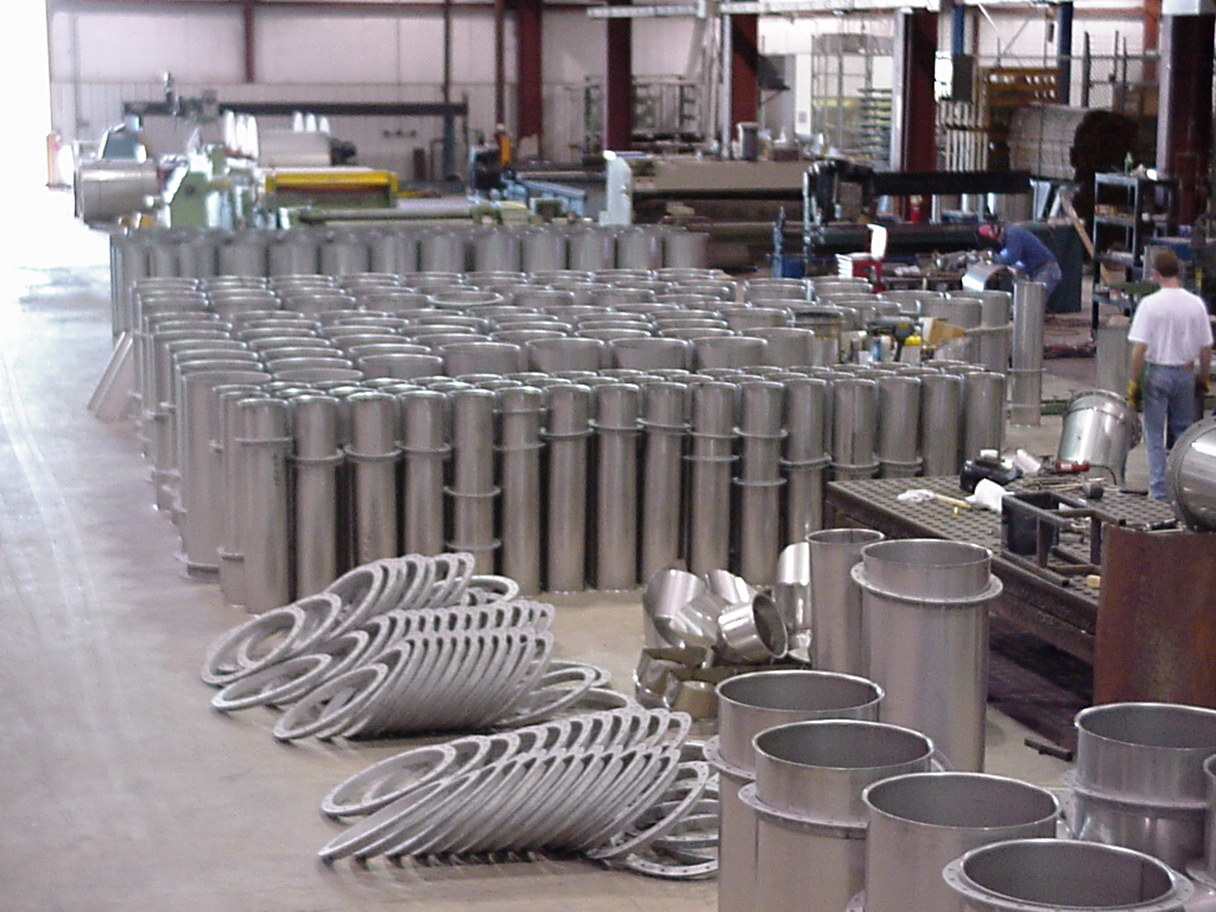
SSTeelcoat coated stainless ductwork is stainless steel with an interior lining of Halar ECTFE, a fluoropolymer. It's hands down our biggest product line.
For your crew, the difference you'll notice first is the install. It's a flanged system that bolts together, with no field bonding, and once it's up, there's little to maintain.
It's also the material that holds up when the spec gets demanding. SSTeelcoat is FM Approved to FM 4922; it produces less smoke in a fire than FRP, and it runs at higher temperatures than FRP or any of our thermoplastics. When fire rating, temperature, or install time is driving the decision, this is where we start, and we lay out the full case for when coated stainless steel is better than FRP duct.
FRP (Fiberglass Reinforced Plastic)
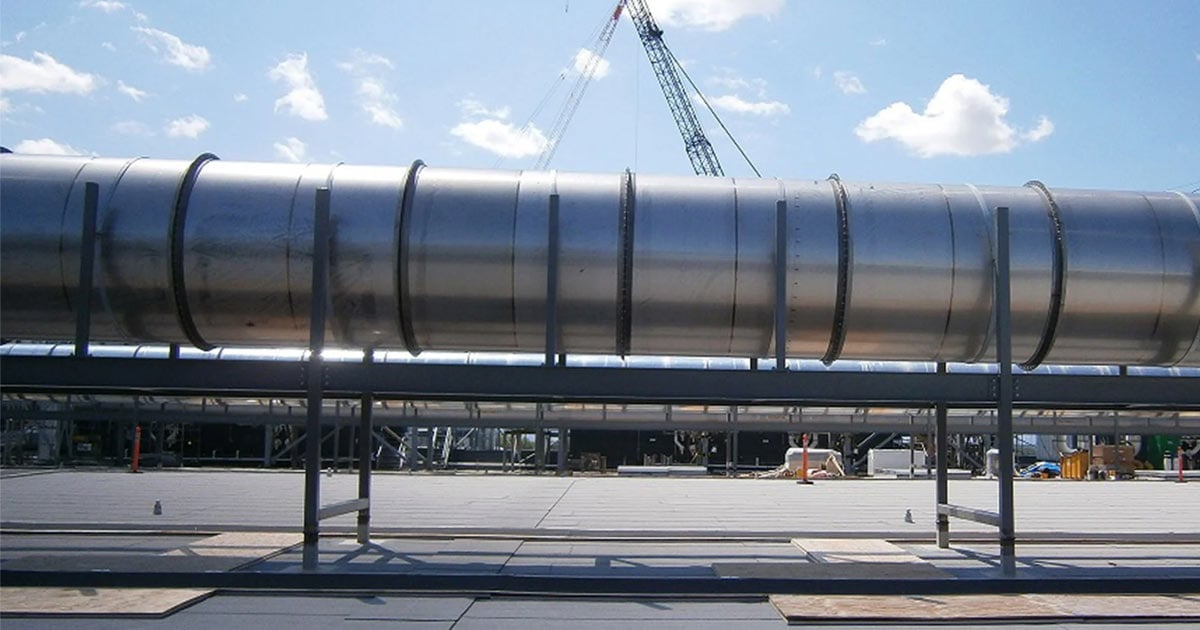
We make FRP every day, and it's a good product. Our preference is still coated stainless when the job allows it. But FRP is often the honest answer in scrubber yards and on low-concentration gas streams. It also costs less up front than coated stainless, so it fits projects where budget is the deciding factor.
The trade-offs land on the install and the years after it. FRP joints are bonded in the field by a crew that knows how to do it, and larger diameters are supposed to be bonded on the inside too, which means someone has to climb into the duct. Outdoors, FRP needs periodic checks for UV damage and gel coat wear.
If those tradeoffs fit the job, we'll quote FRP, and our guide to FRP duct systems covers how to specify it.
PVC
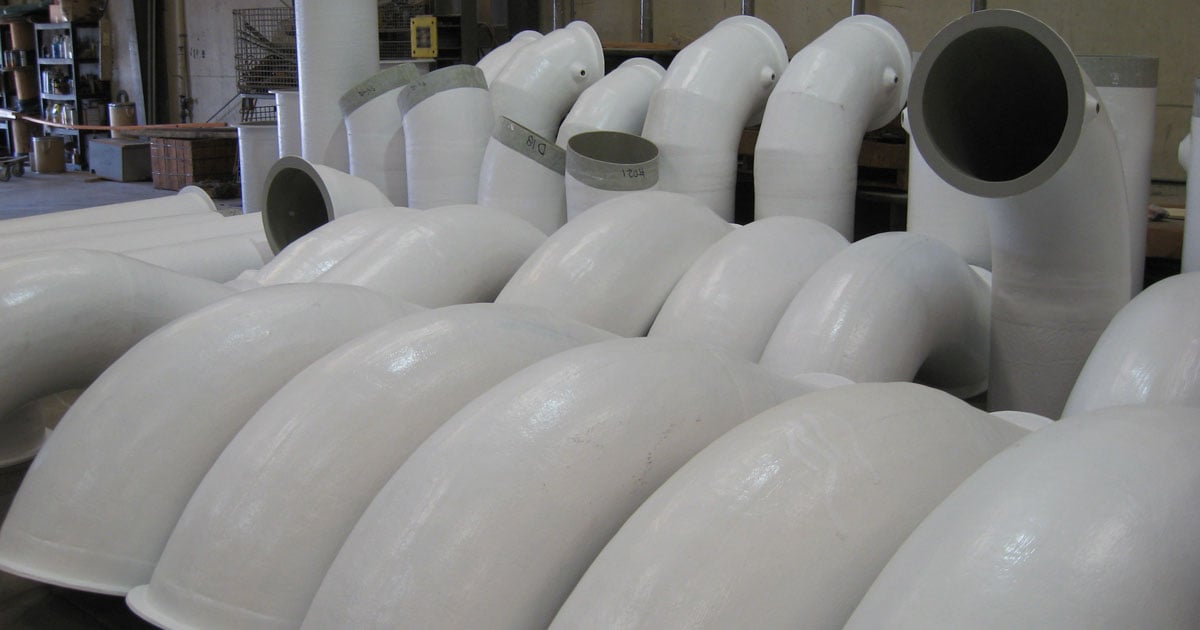
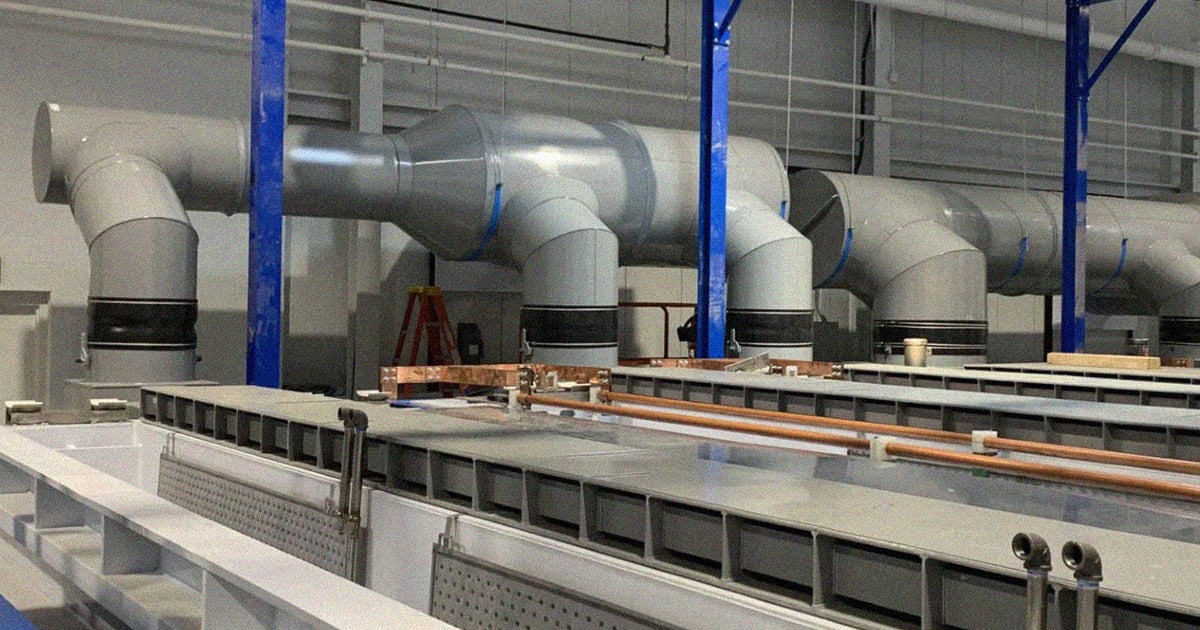
Our thermoplastic duct goes into work like metal plating, metal finishing, and aerospace facilities. PVC ductwork is welded and formed rather than coated, which also makes it the easier material for shapes like hoods.
Thermoplastic is sensitive to temperature in transit, not just in service. When we ship it somewhere very hot or very cold, we may send it in a heated or refrigerated truck so it arrives without warping or going brittle. If the stream runs cool and the chemistry suits it, PVC is the lower-cost call.
CPVC
CPVC is PVC that's been further chlorinated, which lets it handle higher temperatures than standard PVC. That makes it the thermoplastic to look at when a stream runs warmer than PVC is suited for. For round duct in that range, we'll usually point you to coated stainless. Where a thermoplastic fits better, such as fabricated pieces that are hard to coat, CPVC is the step up from PVC.
Polypropylene
Polypropylene is the third thermoplastic we make. Like PVC, it fits lower-temperature streams in specific industrial processes. Whether it's the better thermoplastic for a given stream comes down to the chemicals in it, and we'd rather make that call from your stream data than from a rule of thumb.
Matching Duct Material to the Chemical Stream
If the engineer on your job is laying out process exhaust for hydrochloric acid, hydrofluoric acid, and ammonia, they don't need five sales pitches. They need someone who makes all five materials to look at the stream before the spec gets written. Here's what we ask for, from you or from them:
- The chemicals in the stream and their concentrations
- The operating temperature range
- Fire requirements, including whether the project calls for FM Approved duct
- Where the duct runs: indoors, outdoors or on a roof
- Airflow and duct sizes
Concentration and temperature usually narrow it quickly, and location settles some calls, since an outdoor FRP run takes UV upkeep that coated stainless doesn't. Our application engineers will also tell you when the answer is FRP or a thermoplastic.
Beyond Duct: Fans, Scrubbers and Controls
The duct carries the stream somewhere, usually through a fan and into a scrubber. We build those too: industrial fans and blowers, wet chemical scrubbers, dampers and the control panels that run the system. A controls engineer on our staff programs our scrubbers, and at startup, we can send the person who designed the panel to the site.
When the duct, fan, and scrubber come from one manufacturer, one company answers for how they work together. Split them across three suppliers, and a startup problem can turn into a conversation about whose equipment is at fault.
[IMAGE: Viron wet scrubber connected to its fan and ductwork at an industrial facility]
See the Full Product Line
If one duct material is the only Viron product you've bought, the Viron product catalog is the quickest way to see the rest: all five duct materials, plus the fans, scrubbers, dampers and controls that go with them.